Beavers were hunted to extinction in Scotland by the 16th century. By the early 20th century, the Eurasian beaver had been driven to the edge of disappearance across most of its continental range. In the decades that followed, successful reintroductions across mainland Europe demonstrated what recovery could look like – and by the 1990s, conservation organisations in the UK began making the case for bringing the beaver back.
Progress was slow. Consultation dragged into disagreement, disagreement into delay. So in 2002, Paul and Louise Ramsay did something practical: they brought two Norwegian beavers to Bamff, establishing the first private beaver demonstration project in the UK.
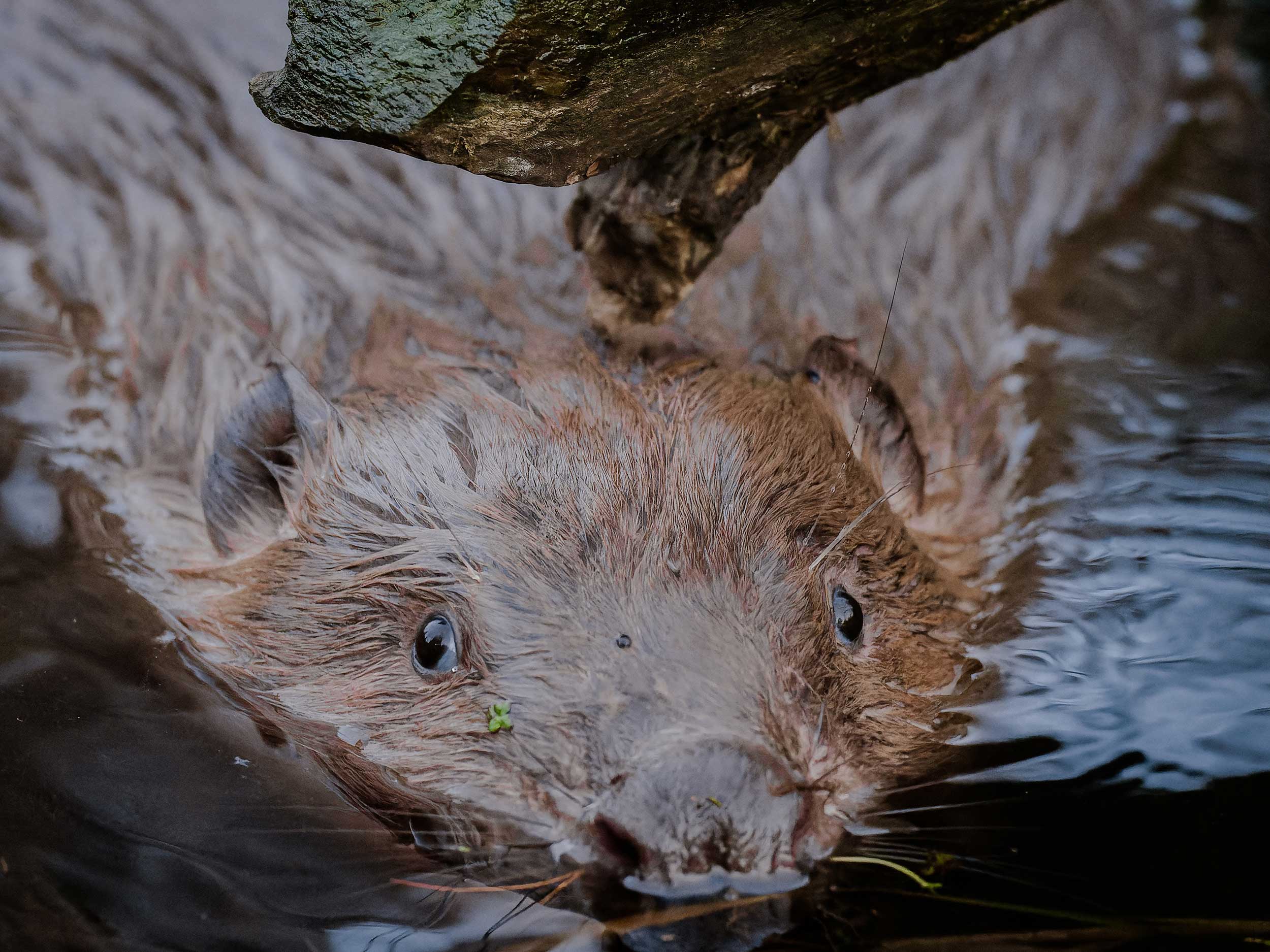
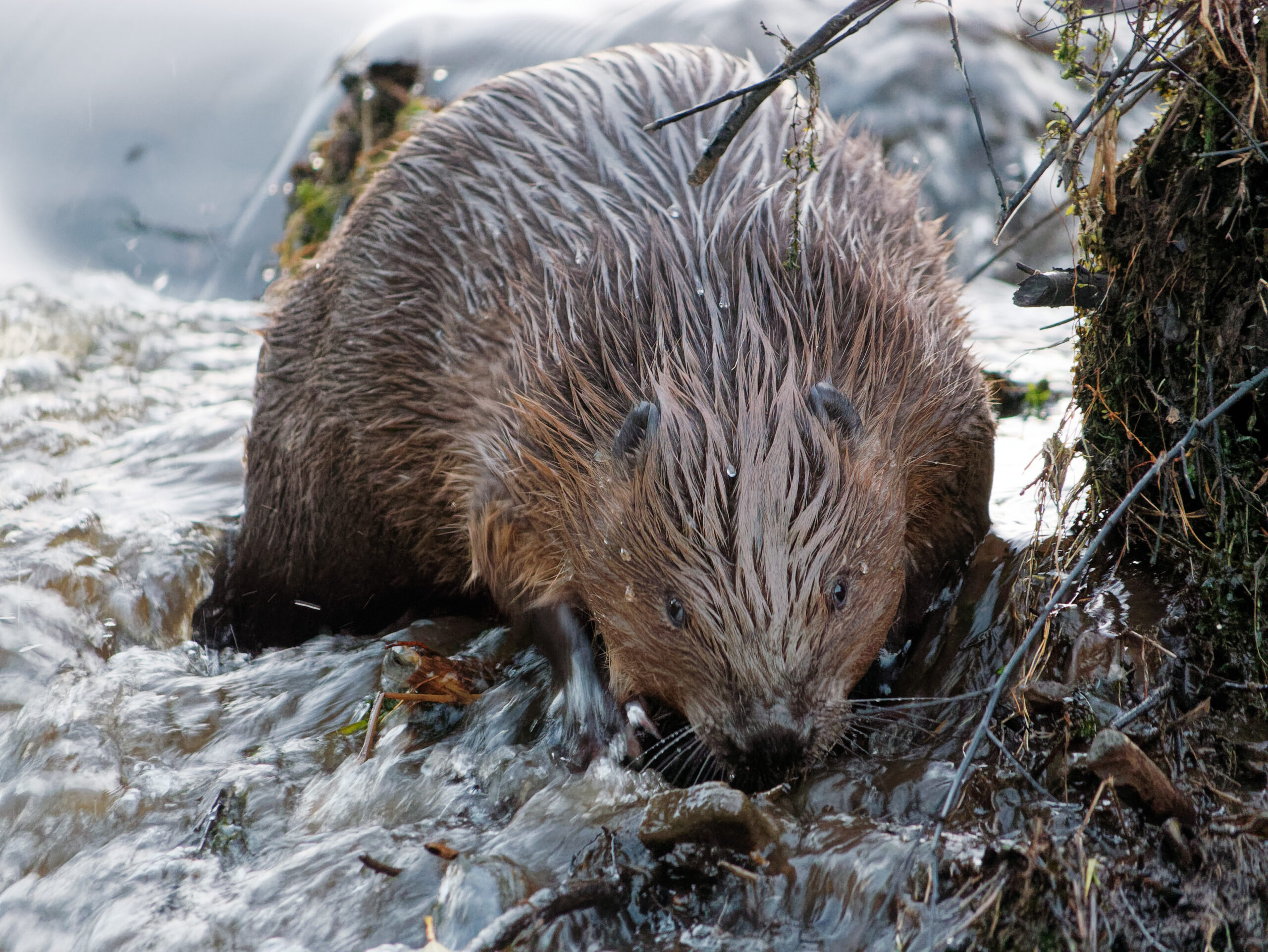
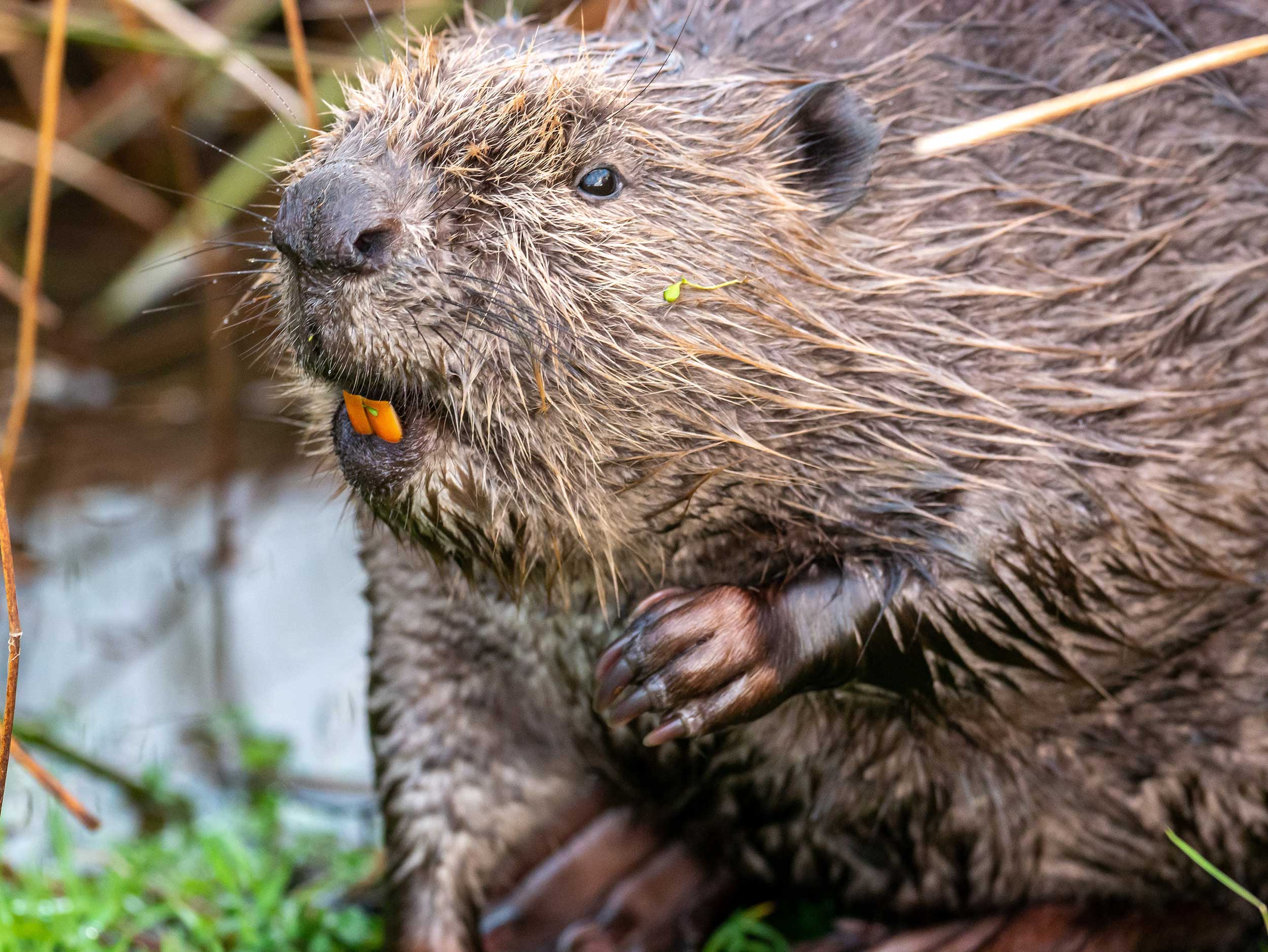
Mature beaver
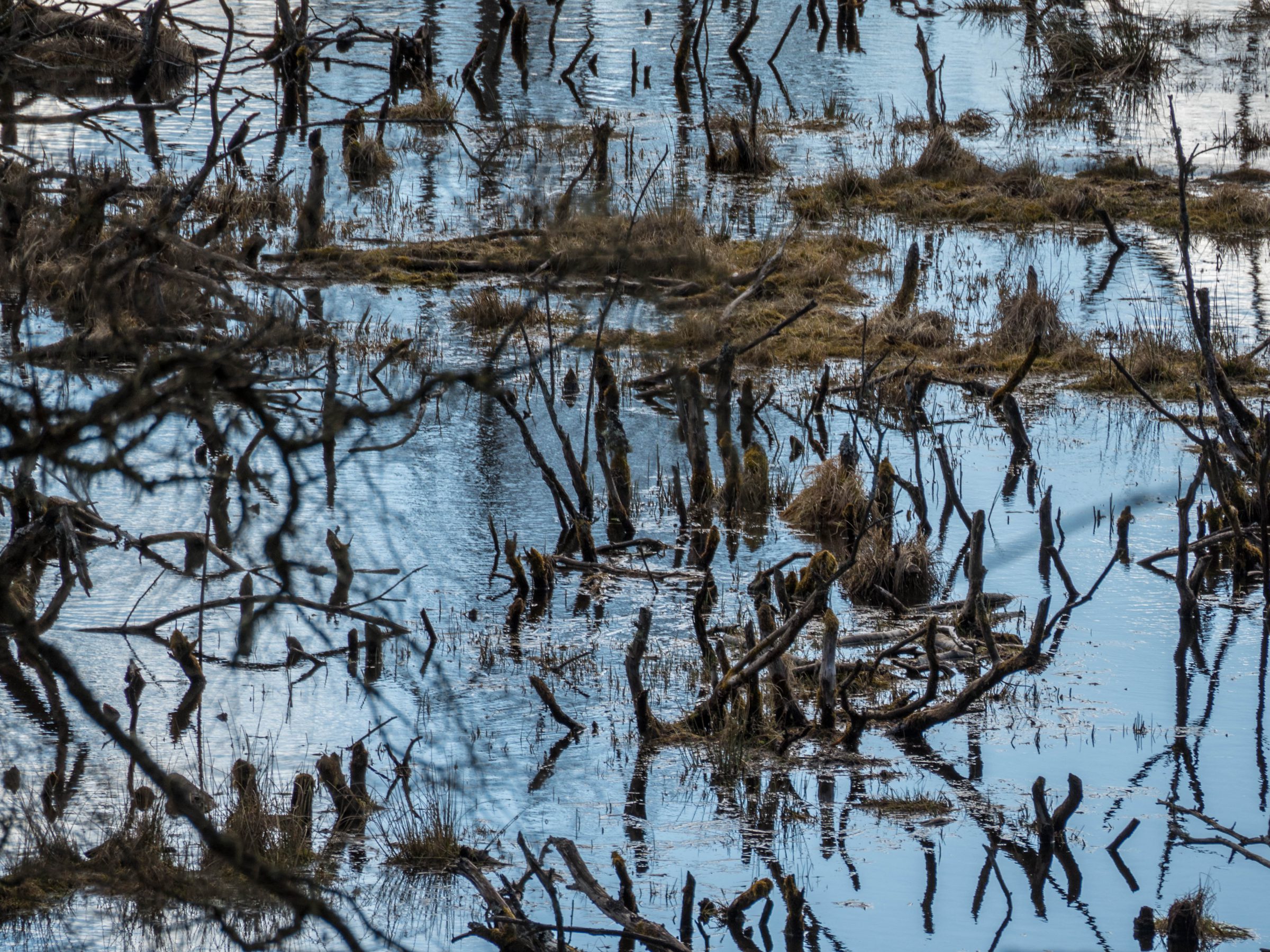
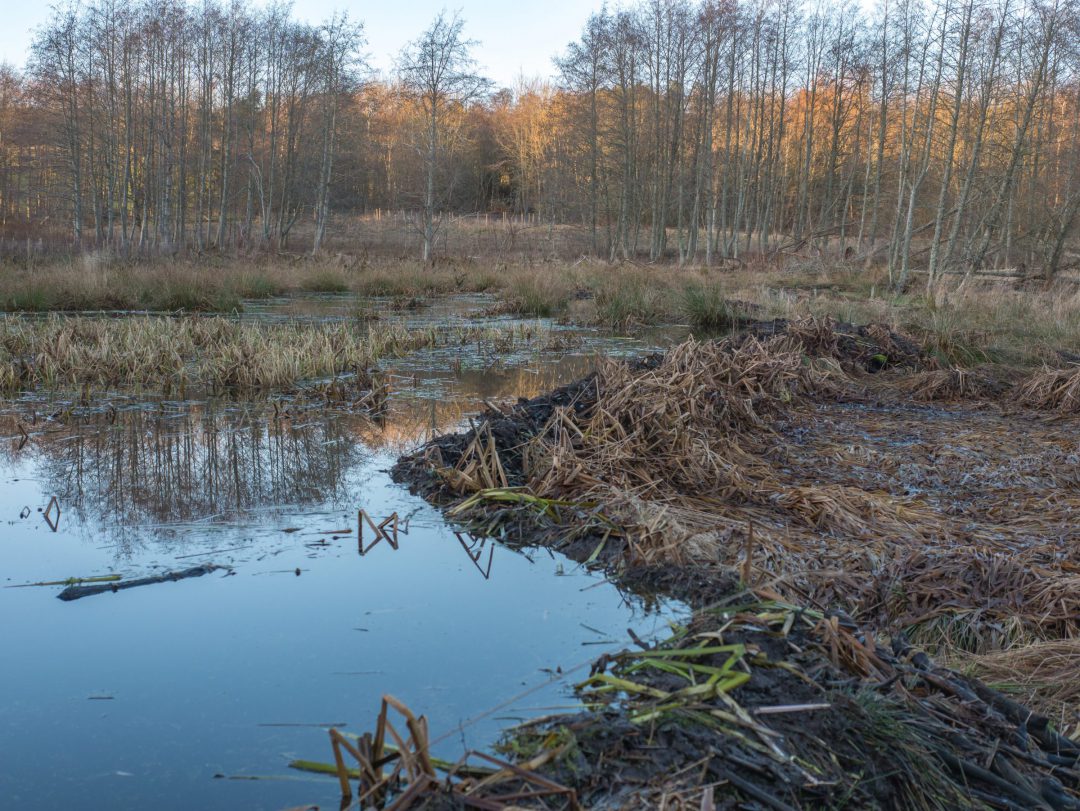
Beaver swamp
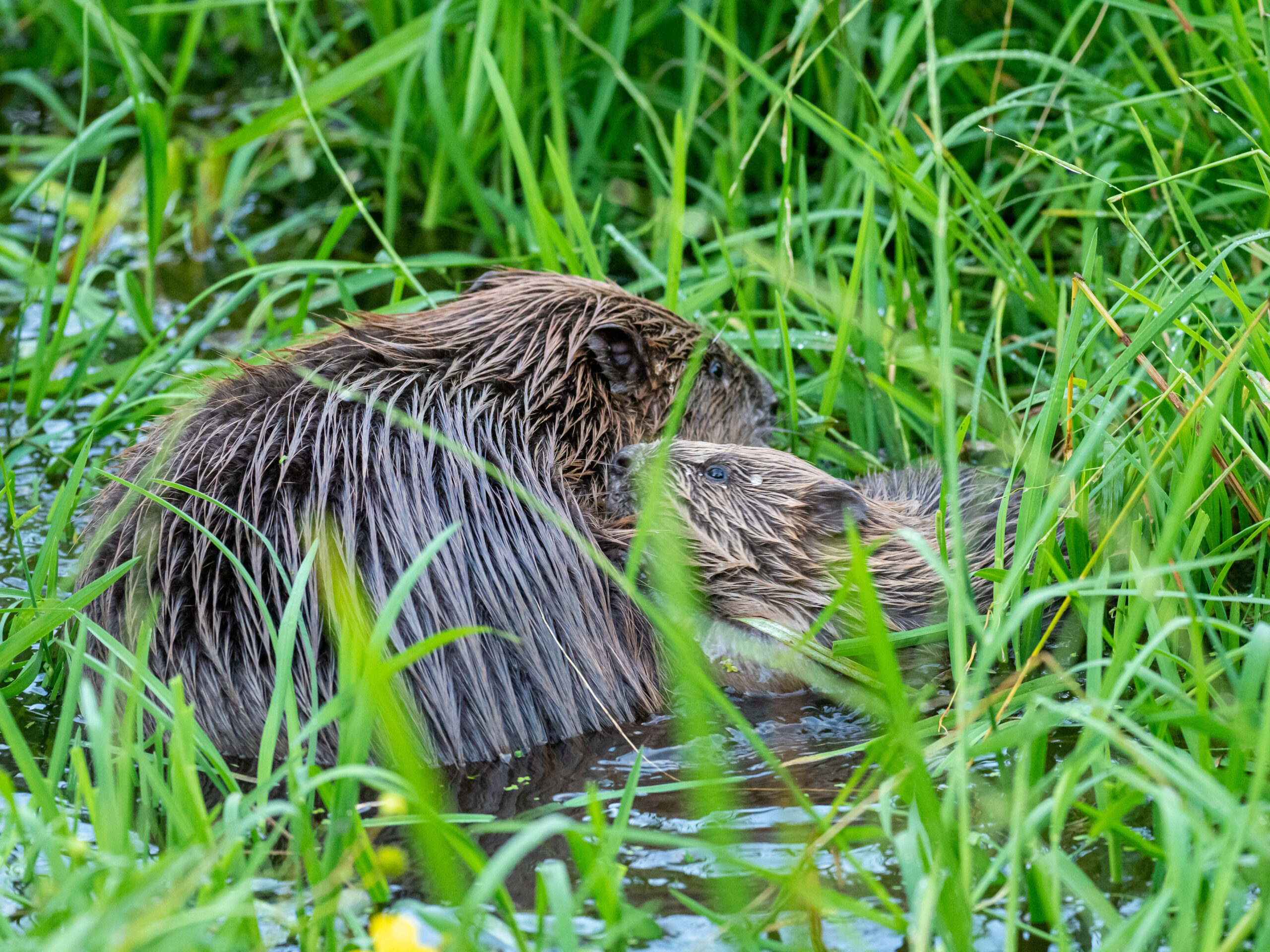
Beaver kit and mother
It was not straightforward in the early years. Further animals arrived — Polish and Bavarian beavers joining the initial pair – and establishing a breeding population took time and patience. But breed they did, and what followed has been one of the most remarkable modern transformations in Scottish conservation.
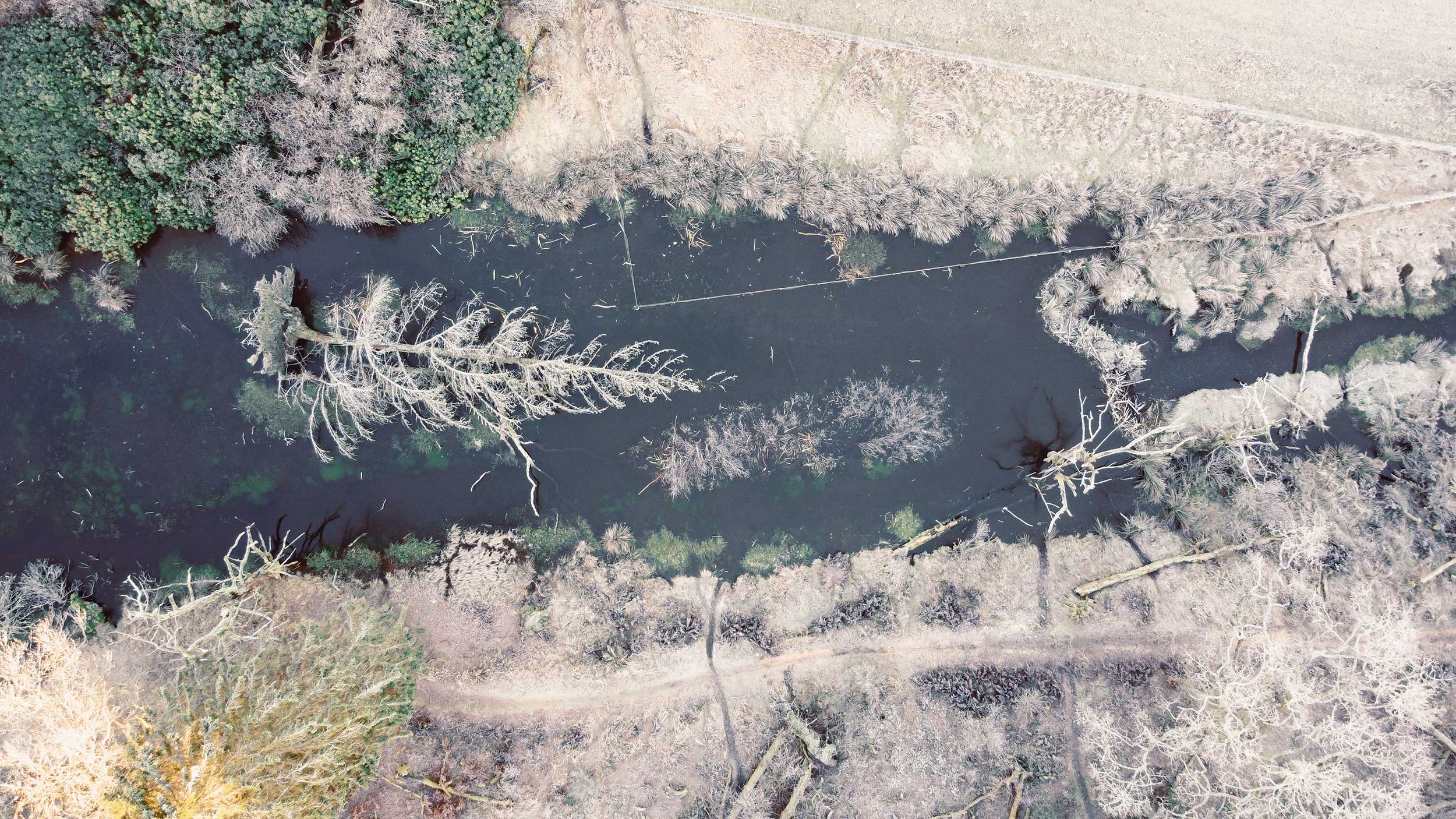
Two family groups, established in large enclosures on the estate, have been breeding continuously since 2005 and 2006. Over more than two decades, they have converted a modest agricultural ditch into an extraordinary engineered wetland: dozens of dams, pools, braids and meanders stretching through the low ground of the estate. Trees felled and drowned by beaver activity have created deadwood habitat for fungi, insects, woodpeckers and owls. Otters and water voles have moved in. Herons, ducks and a widening community of wetland invertebrates and amphibians have followed.
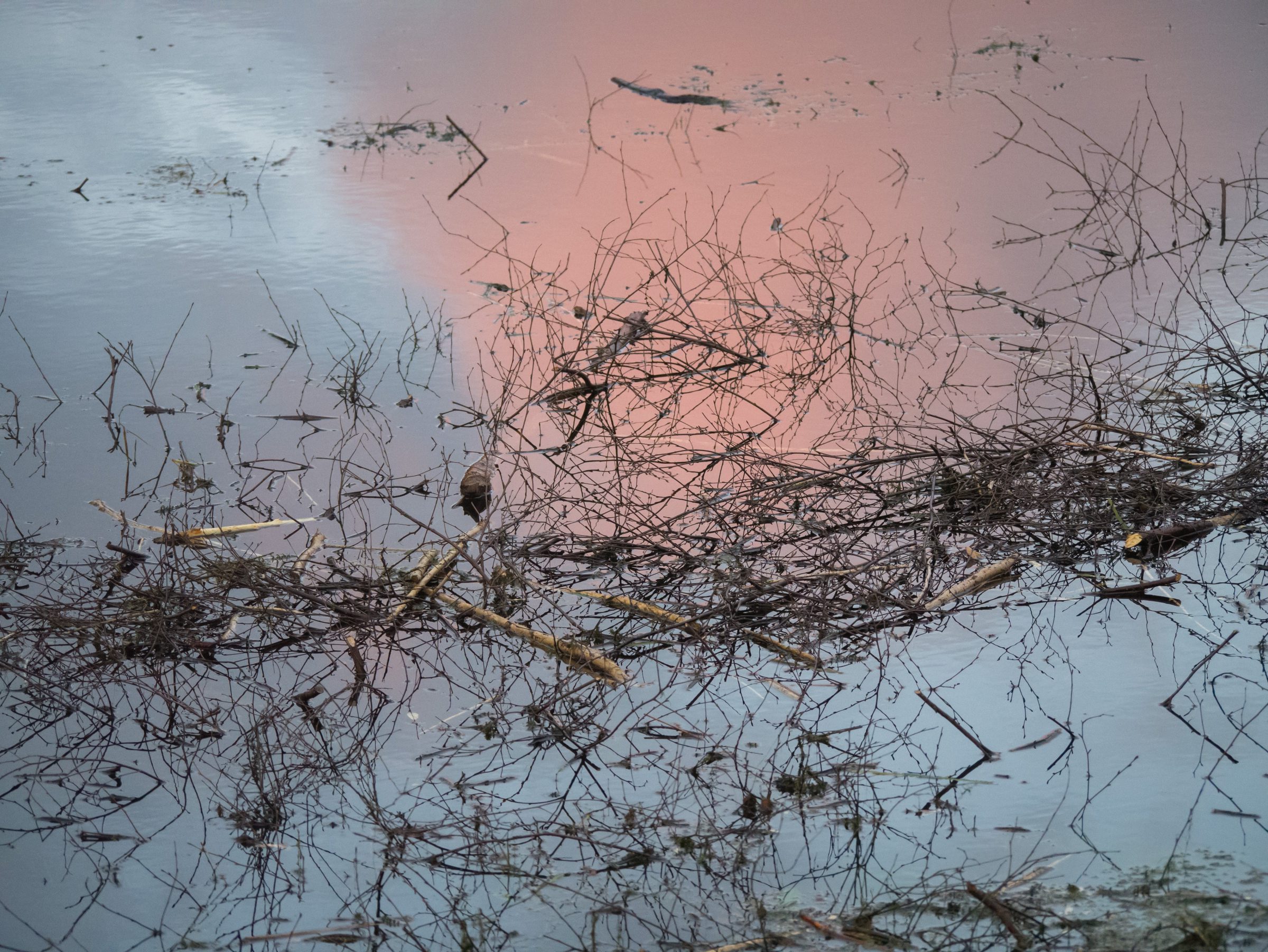
Beaver pool and dam in winter
What is striking – and what becomes clear to anyone who spends time walking the beaver wetlands at Bamff – is the sheer scale of what a small number of animals can achieve when left to work undisturbed over years. No human intervention could have produced this landscape. The beavers built it themselves.
Winter food cache
The Bamff beavers have contributed to a significant body ofacademic research, including PhDs, MSc dissertations and undergraduate studies. Numerous articles and several films have documented the project. The site continues to attract researchers, wildlife enthusiasts and visitors from across the UK and beyond.
Academics have long studied beaver behaviour at Bamff. Read their research here.
ABOUT BEAVERS
Beavers are semi-aquatic rodents. There are two species, the Eurasian and the North American, which cannot interbreed, but display similar characteristics and behaviours. They are excellent swimmers and divers, can swim underwater for ½ mile, and hold their breath for up to 15 minutes. Beavers are best known for their natural trait of building dams in rivers and streams, and building their homes (known as beaver lodges) in the resulting pond. They are the second-largest rodent in the world.
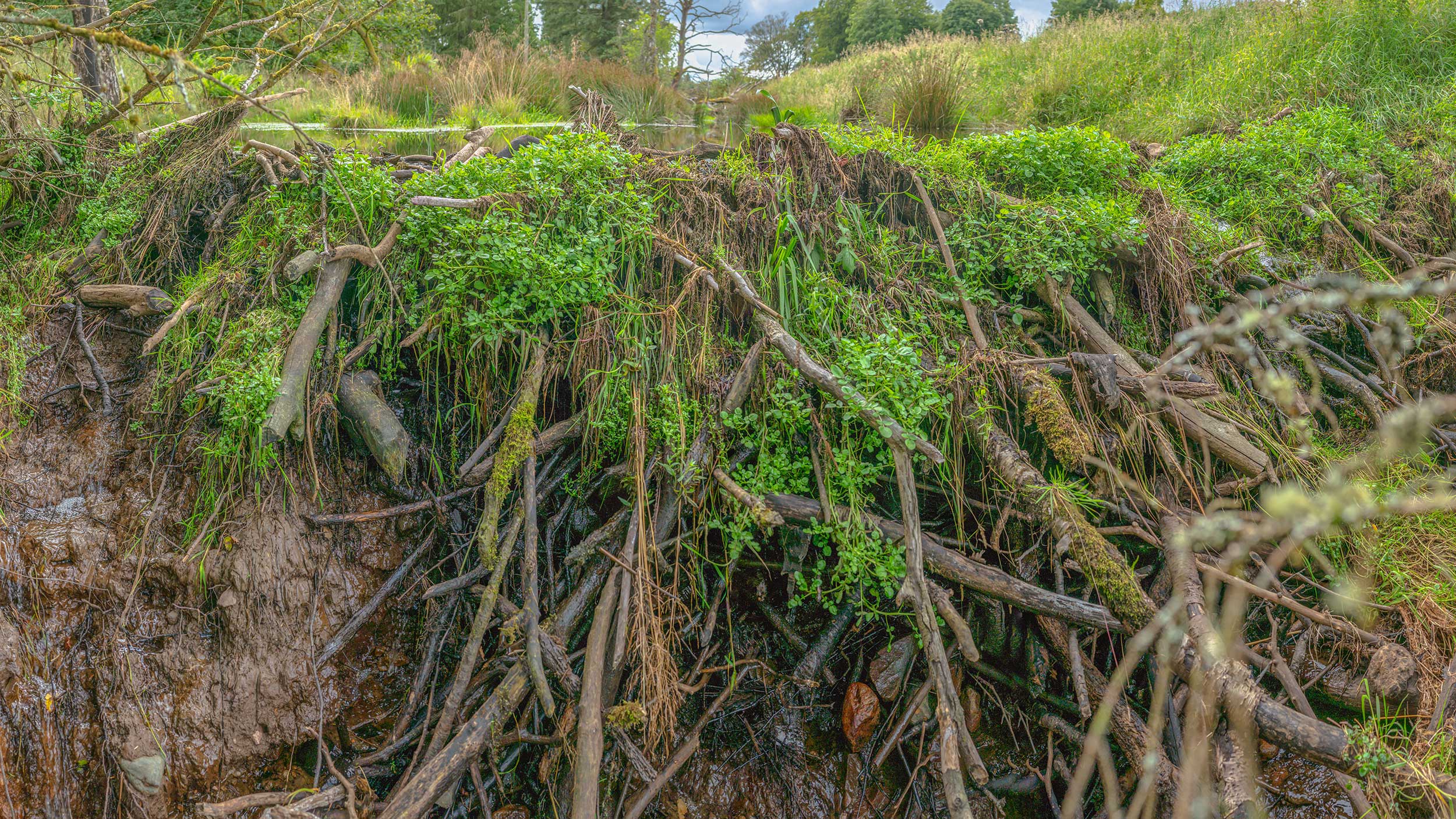
Beaver dam up close in the summer
Beavers always work at night carrying mud and stones with their fore-paws and timber between their teeth. The largest known dam was discovered by satellite imagery in Northern Alberta in 2007, approximately 850 meters (2,790ft) long. Bamff’s longest dam (and probably the UK’s) is ten times shorter. Dam building is extremely beneficial in restoring wetlands and providing habitat for many rare and common species.
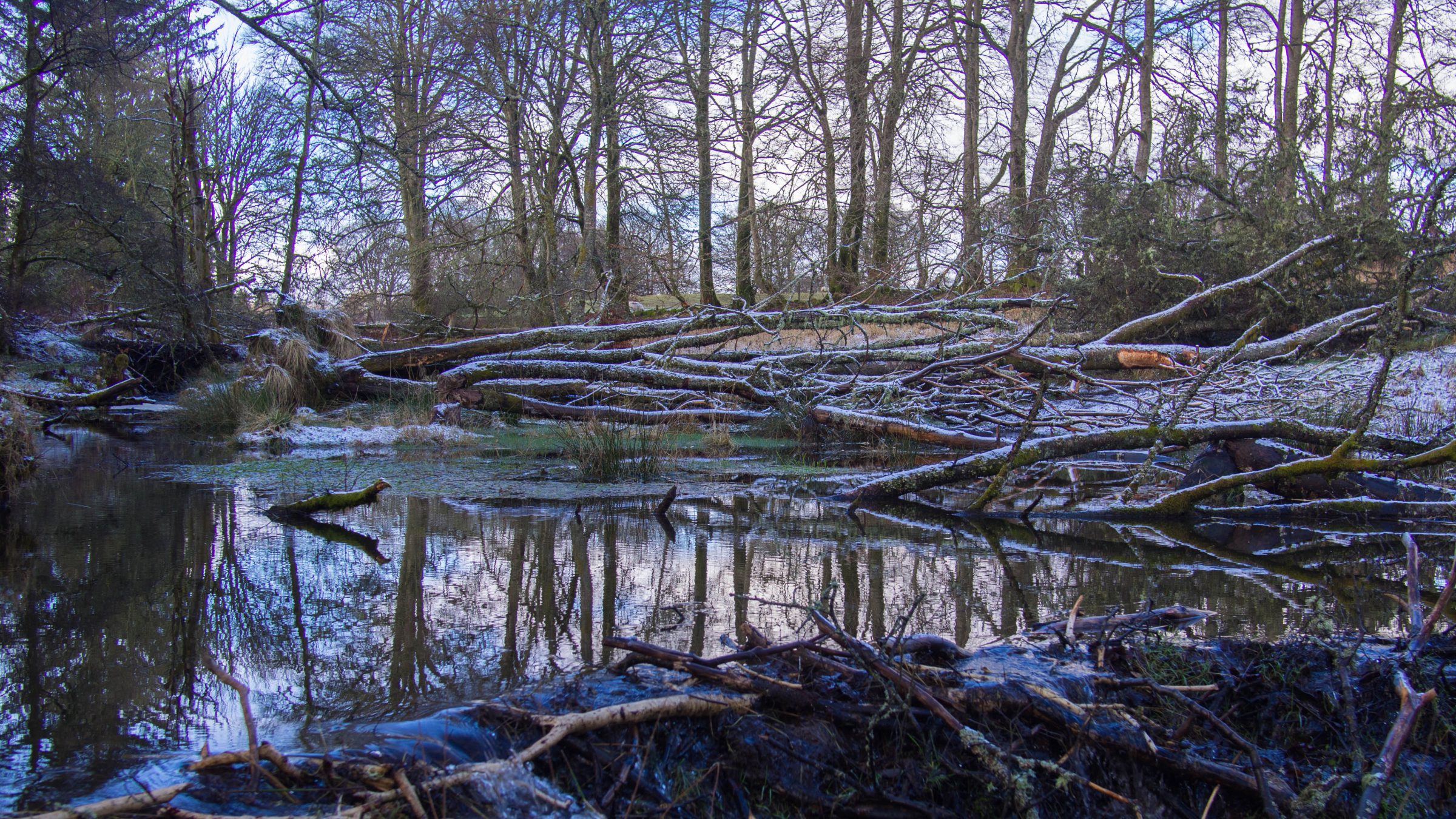
Beaver pool in winter
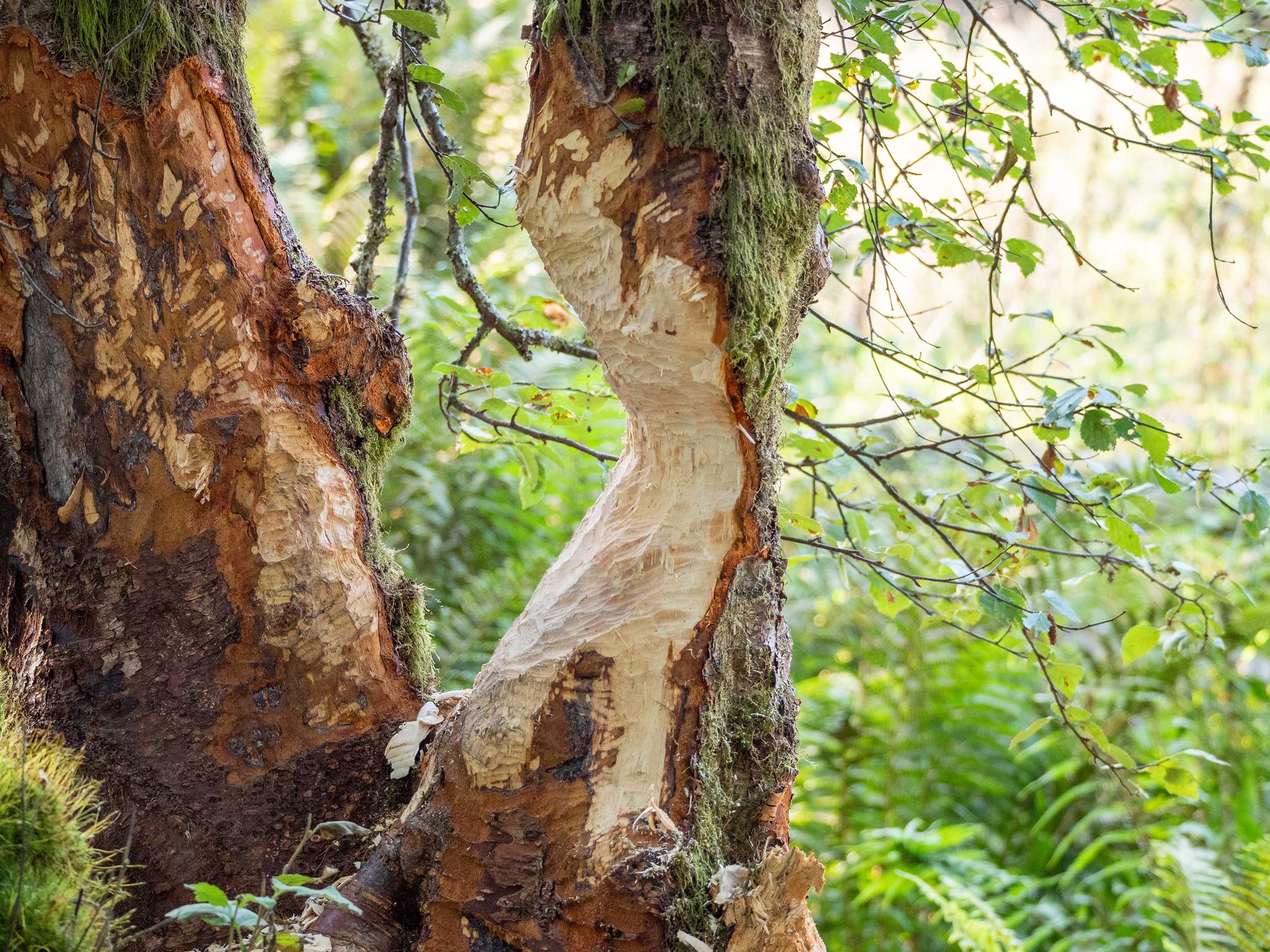
Gnawed tree
The ponds created by well-maintained dams help protect the entrance of the beavers’ lodge from predators. The lodge is also created from severed branches and mud. The beavers cover their lodges with fresh mud every autumn, which freezes when the frost sets in. The mud becomes almost as hard as stone. The lodge has underwater entrances to make entry nearly impossible for any other animal. Contrary to popular belief, beavers create the entrance after they finish building the dam and lodge structure. There are typically two chambers within the lodge, one for drying off after exiting the water, and another, drier one where the family actually lives.
Beaver at dusk
Bamff's longest beaver dam
Beavers usually live in family groups. As many as 12 beavers may make up a family, but generally there are 6 or fewer. The group includes the adult male and female, the young born the year before, and the newborn. A female beaver carries her young inside her body for about three months before they are born. She has two to four babies at a time. Most young beavers, called kits or pups, are born in April or May. Beavers live as long as 12 years.
Classic beaver teeth marks
Beavers eat the inner bark, twigs, leaves, and roots of trees and shrubs. Poplar trees, especially aspens, cottonwoods, and willow trees are among their favourites. They also eat water plants, and especially like the roots and tender sprouts of water lilies. Beavers store food for winter use. They anchor branches and logs in a cache under the water near their lodges. In winter, they swim under the ice and eat the bark.
THE TAY BEAVERS
Alongside the work at Bamff, the Ramsay family played an active role in campaigning for the wild beaver population that had established itself in the Tay catchment — animals that had escaped from various enclosures and been quietly multiplying since the early 2000s. The Scottish Wild Beaver Group, formed through this campaign, worked with the Scottish Government’s Tayside Beaver Study Group to monitor the population and make the case for legal protection.
In May 2019, the Scottish Government formally declared the beaver a protected species — a landmark moment for Scottish conservation, and one in which Bamff’s two decades of demonstration work played no small part.