One of the defining principles of the Bamff Wildland Project is the reintroduction of large herbivores as ecological agents. At low densities, and free to roam across the full perimeter-fenced wildland, three species of grazer are now at work on the land – each with distinct behaviours, each playing a different role in the slow recovery of the habitat.
This approach draws on a growing body of evidence that primitive grazing relationships – the disturbance, browsing, rootling and dung deposition of large mammals moving freely through a landscape – are essential to the kind of structural complexity and biodiversity that cannot be achieved through vegetation management alone. The results at Bamff are already visible: bare ground patches colonised by wildflowers, scrub establishing in grazed fields, invertebrate communities expanding in dung and disturbed soil.
Density is carefully monitored. The aim is the lightest effective touch – enough ecological impact to drive habitat change, not enough to suppress the natural regeneration that is the project’s whole purpose.
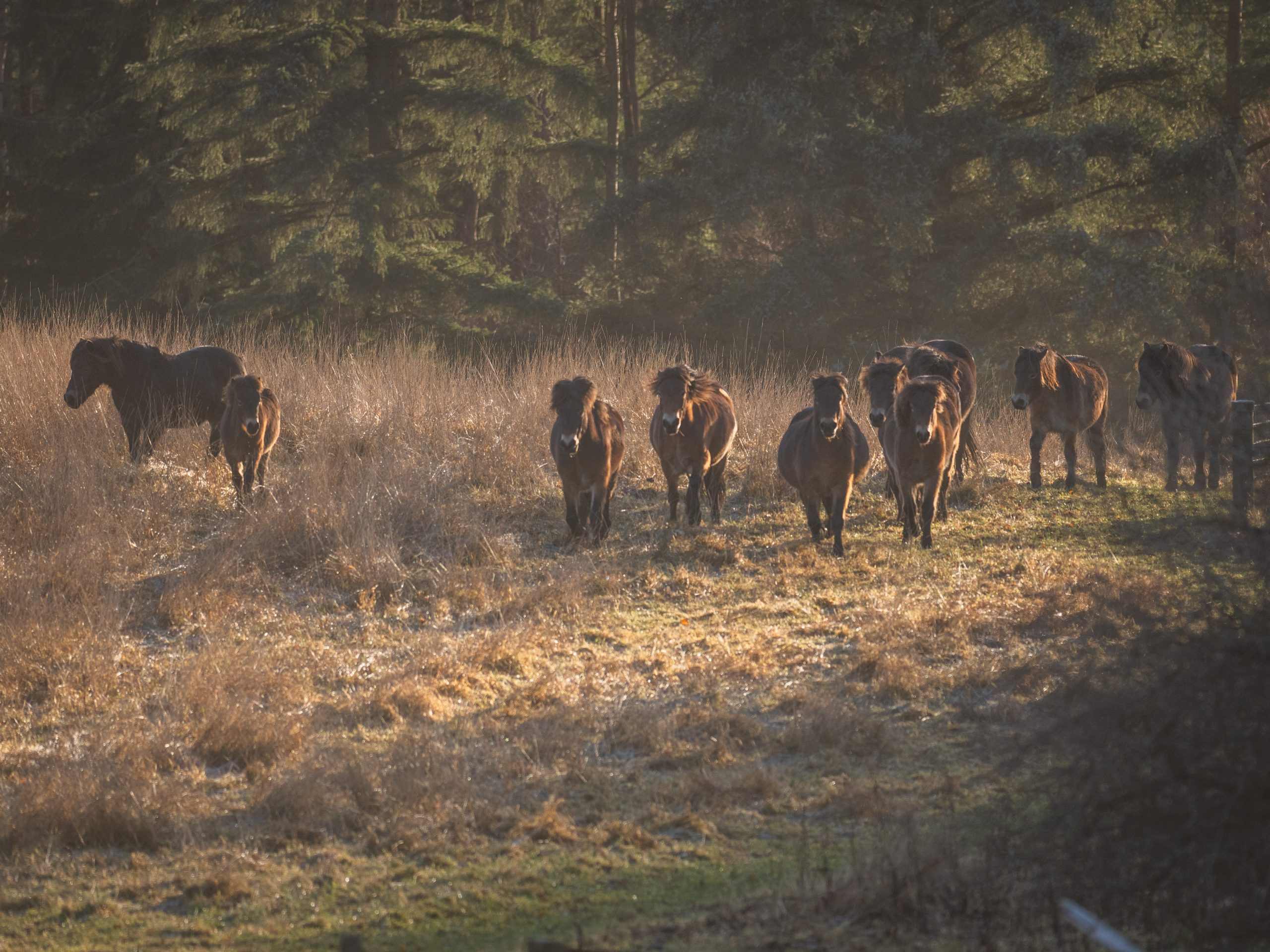
A Herd of Exmoor Ponies at Bamff Wildland
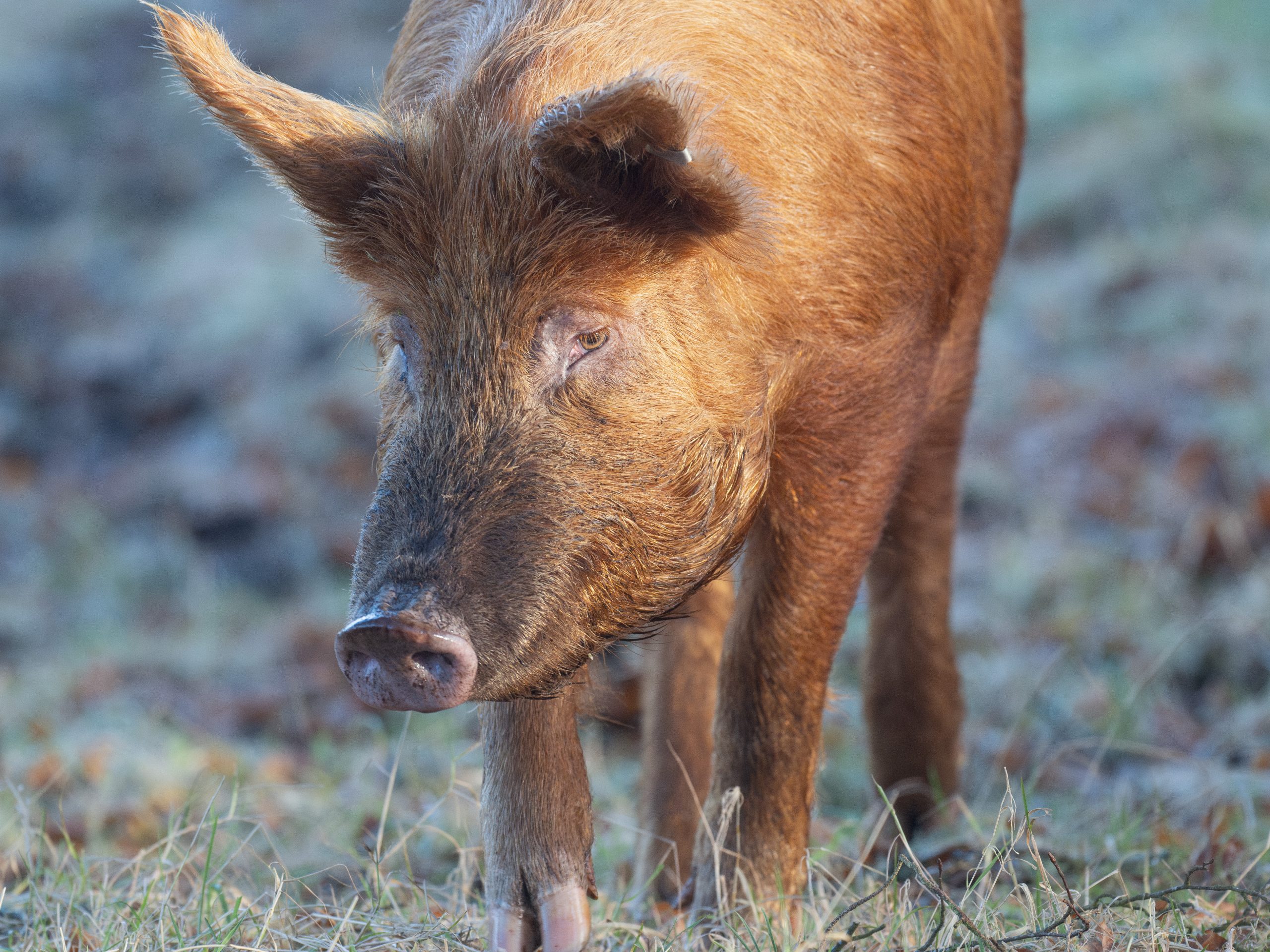
A Tamworth Pig at Bamff Wildland
Pigs
The Tamworth pig is the domestic breed most closely related to the wild boar – a species native to Scotland until its extinction in the 13th century. Tamworths bring something no other grazer can: the rootling behaviour of a true omnivore, turning and aerating soil in ways that create micro-habitats for invertebrates and planting opportunities for native tree saplings.
There currently are five Tamworths and Tamworth/Cune Cune crosses on the wildland. They are characterful, resilient animals, well-adapted to the Scottish climate, and their impact on the ground is immediately legible — dug patches that quickly become hotspots for botanical and invertebrate activity.
Cattle
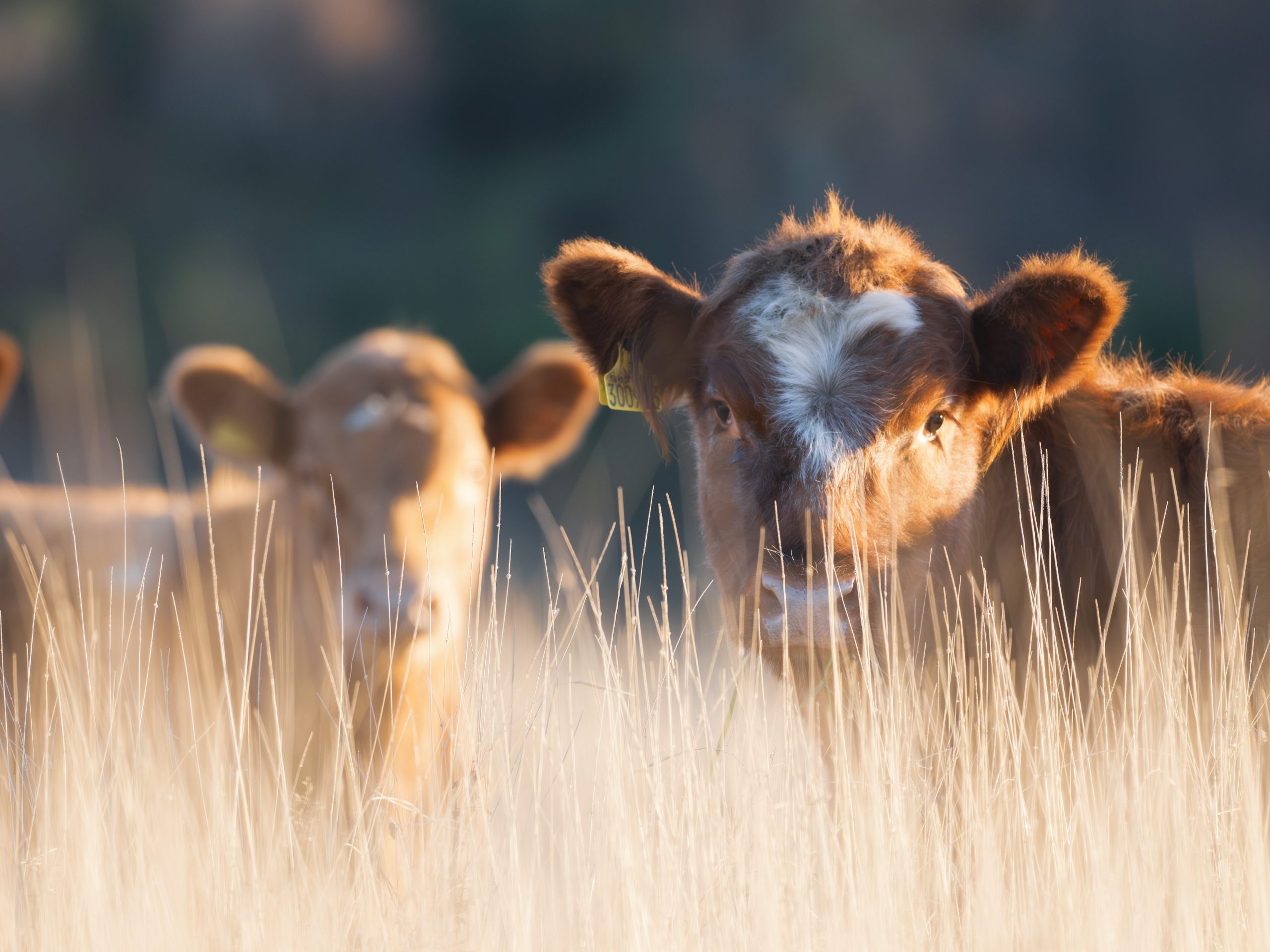
A herd of cattle roams the wildland as a proxy for the aurochs – the large wild cattle that were once native to Scotland before their extinction. Breeds seen on the wildland include Luing and Aberdeen Angus crosses, and have a mixed ownership by Bamff and one of our neighbouring farmers.
Cattle are the most physically impactful of the three grazing species. They tear up ground, create patches of shorter grass and bare soil, and their dung provides habitat for a wide range of invertebrates. This disturbance is precisely what the recovering habitat needs — opening space for flowers, herbs and the insects that follow.
Luing Cross Cattle at Bamff Wildland
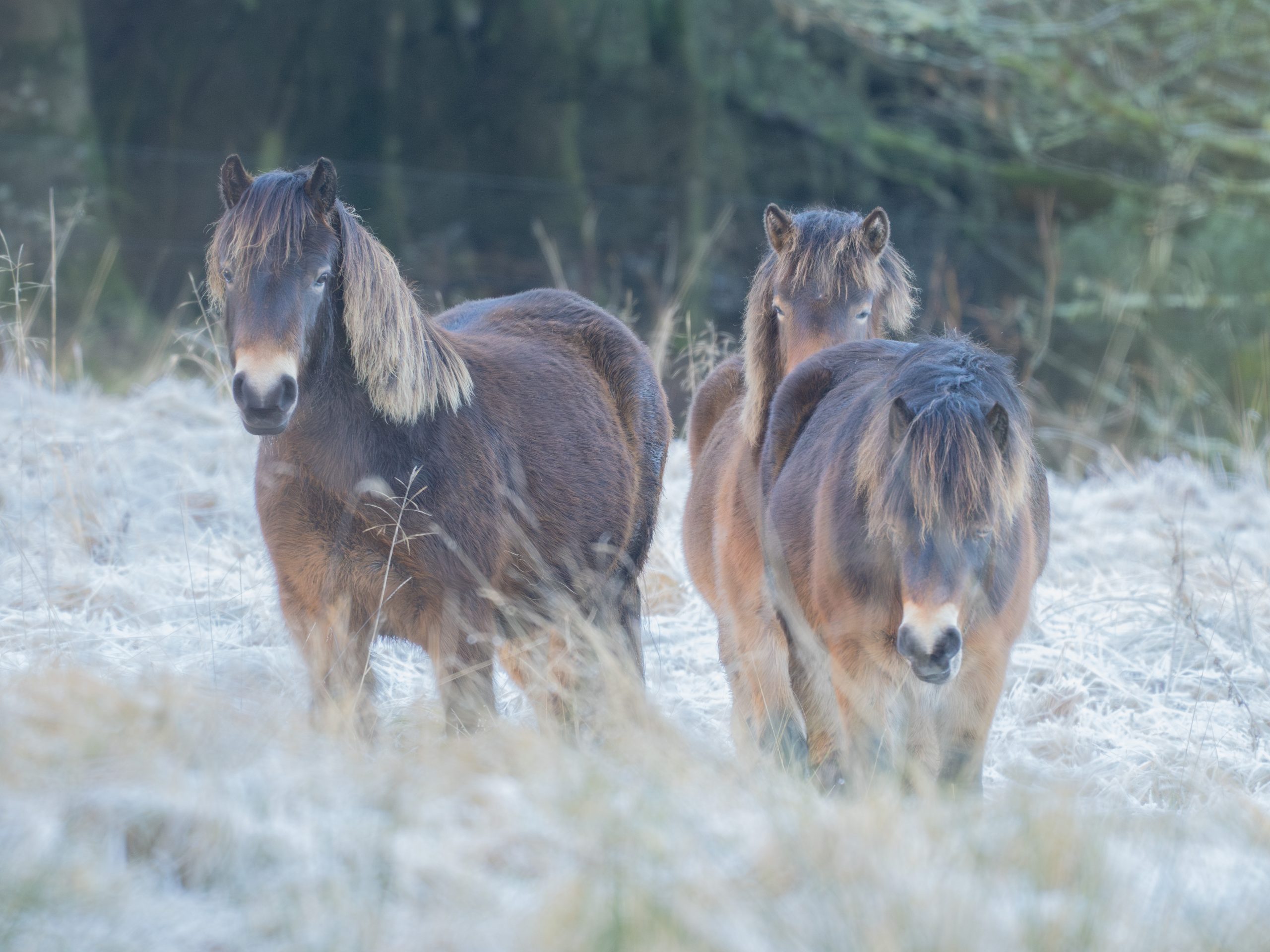
Exmoor Ponies at Bamff Wildland
Ponies
Eleven Exmoor ponies arrived at Bamff in January 2024, originally from a herd based on the Scoraig Peninsula. This breeding group belongs to researcher Debbie Davy, whose work on Exmoor genetics has revealed them to be among the closest living relatives of ancient wild hill ponies – making them an ecologically meaningful proxy for the native horses that once roamed these uplands.
The Bamff herd carries some of the most genetically significant bloodlines in the Exmoor population, making the estate a core centre for the conservation of this rare breed across Europe. Foals have been born at Bamff every season since the herd’s arrival – a clear sign that they have settled well into the wildland.